

Around week 14 of my first pregnancy, something shifted. I woke up one morning and didn't feel like I'd been hit by a truck. I ate breakfast without gagging. I even went for a walk.
The second trimester glow? Not exactly. But the relief was immense.
Then at week 18, I sneezed while standing up from the couch, and a sharp, stabbing pain ripped through my lower belly. I doubled over, convinced I'd ruptured something. It lasted maybe 10 seconds. Then it was gone.
Round ligament pain. Nobody warned me.
It happened again when I twisted too fast, when I coughed, when I laughed too hard. It was terrifying the first few times. Then my midwife explained: the round ligaments support the uterus, and as the uterus expands, those ligaments stretch. Sudden movements cause them to spasm. It hurts like hell, but it's harmless.
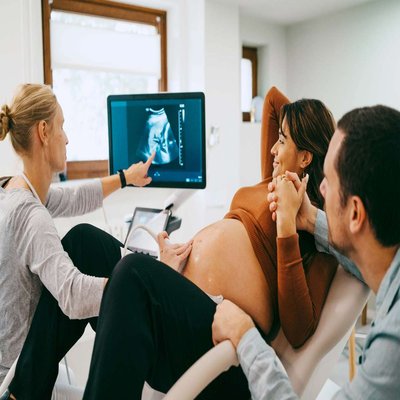
The anatomy scan at 20 weeks was my next big hurdle. I'd been anxious for weeks. What if something was wrong? What if they found a problem? I couldn't sleep the night before. My husband came with me and held my hand. The tech was silent for what felt like hours — but was probably only two minutes — while she checked the heart, the brain, the spine, the kidneys.
Everything was normal. I cried with relief.
I've had patients who got scary findings at the anatomy scan. Things like soft markers that often resolve, or more serious anomalies. I can't pretend that news isn't devastating. But I can tell you that the waiting between scan and specialist is agonizing, and the best thing you can do is stay off Google and lean on your care team.
For most people, the second trimester is the easiest. But "easiest" still includes weird discharge, itchy skin, leg cramps, and the first flutter of movement that feels like gas but isn't.
If you're in your second trimester and still waiting for that magical energy boost, don't worry. It comes for most, but not all. And that's okay too.
This article reflects personal experience. Always report severe or persistent pain to your provider.
— Emily