

I have 31-day cycles. I've always had 31-day cycles. Ever since I started menstruating at 13, my cycles have been longer than the textbook average. But every app, every doctor, every family planning guide I encountered assumed 28 days. They were all wrong, and that wrongness cost me.
When I calculated my first due date using the standard LMP method, it said December 15. I was excited — a Christmas baby! I told my mom. She booked a flight for December 14, non-refundable, because she wanted to be there for the birth. My mother-in-law did the same. I started planning my maternity leave for mid-December.
Then my first ultrasound at 8 weeks said something different. The tech measured the crown-rump length and said, "Based on this, your due date is December 22." A week later. I was confused. "Which one is right?" I asked. She explained that my longer cycles meant I ovulated later, so the LMP-based date was off. The ultrasound was more accurate.
I had to call my mom. "Remember that flight? You might want to change it." She couldn't. The airline charged a change fee. She ended up flying in on December 14 and staying for three weeks, waiting for the baby. My daughter was born on December 20 — right between the two dates. My mom was there, but she'd already used up most of her vacation time waiting.
That experience taught me something important: the 28-day cycle is a myth for a huge number of people. According to a 2022 study in Obstetrics & Gynecology, only about 30% of women have a consistent 28-day cycle. The rest have shorter, longer, or irregular cycles. Yet our entire due date system is built on that 30% average.
The adjustment is simple: for every day your cycle is longer than 28, add a day to your due date. For me, 31-28=3. Add 3 days. That put my due date at December 18 — right between the LMP estimate (Dec 15) and the ultrasound (Dec 22). My baby came on Dec 20. The adjusted LMP was the closest.
If you have irregular cycles — varying by 7+ days from month to month — LMP is essentially useless. Your due date should be based on early ultrasound, ideally before 14 weeks. And if your provider gives you a due date that doesn't match your ultrasound, ask why. You have the right to understand how your date was determined.
I had a patient — I'll call her "Maya" — who had PCOS and cycles ranging from 35 to 60 days. Her first pregnancy, she used LMP to calculate her due date and ended up being induced at what she thought was 42 weeks. Her baby was born at 6 pounds — small for a post-term baby. Maya later learned that her true due date was probably two weeks later. The induction was likely unnecessary. She was furious — at the system, at the doctor who didn't ask about her cycle length, at herself for not knowing better.
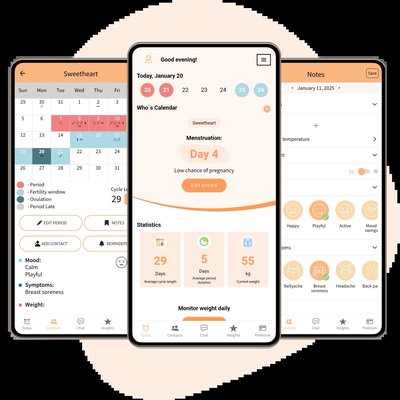
If you're reading this and you're not pregnant yet, start tracking your cycle now. Not obsessively — just note the start date of your period each month. After 3-6 months, you'll know your average length. Write it down. When you get pregnant, tell your provider on day one. That small piece of information can save you weeks of confusion and potentially unnecessary interventions.
Even with accurate cycle data, remember: a due date is a guess. A good guess, but a guess. The baby decides. I tell all my patients to think of their due date as a "due month" — the center of a 5-week window from 37 to 42 weeks. Plan your life accordingly. Don't book non-refundable flights. Don't promise anyone a specific day. And if your mom asks for a date, give her one that's a week later than your real one. She'll thank you when she's actually there.
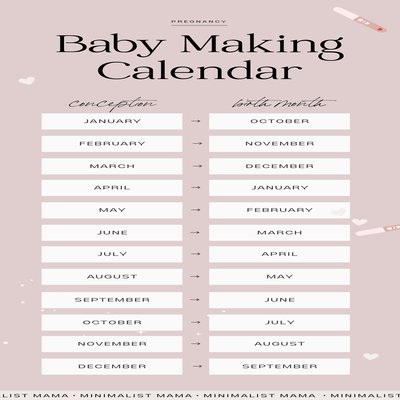
For my current pregnancy (due November 2026), I told my midwife on day one: "31-day cycles, likely ovulated around day 17." She nodded and adjusted her due date calculation. That small conversation saved me weeks of confusion. My family has a month, not a date. And I'm sleeping better because of it.
This article reflects personal experience and clinical evidence. Always use ultrasound dating for clinical decisions, but share your cycle length with your provider.
— Emily